Water Damage & Structural Drying
Water extraction, moisture mapping, controlled demolition when needed, dehumidification, air movement, and documented drying progress.
Explore water damage →
Water extraction and structural drying for Greater Houston. Based in Pinehurst. Call or text to check availability.
Straight answers for the calls we take most often, starting with what to do in the first ten minutes.
From the first moisture reading to the final walkthrough, we focus on controlling damage, drying the structure correctly, and keeping you informed.
Water extraction, moisture mapping, controlled demolition when needed, dehumidification, air movement, and documented drying progress.
Explore water damage →Containment, HEPA filtration, removal, cleaning, and practical moisture-control guidance.
Explore mold remediation →Damage assessment, cleanup planning, smoke residue treatment, and odor-control coordination.
Explore fire & smoke →Response for roof leaks, wind-driven rain, and water intrusion after severe weather.
View storm response →Professional mitigation support for houses, offices, retail spaces, and rental properties.
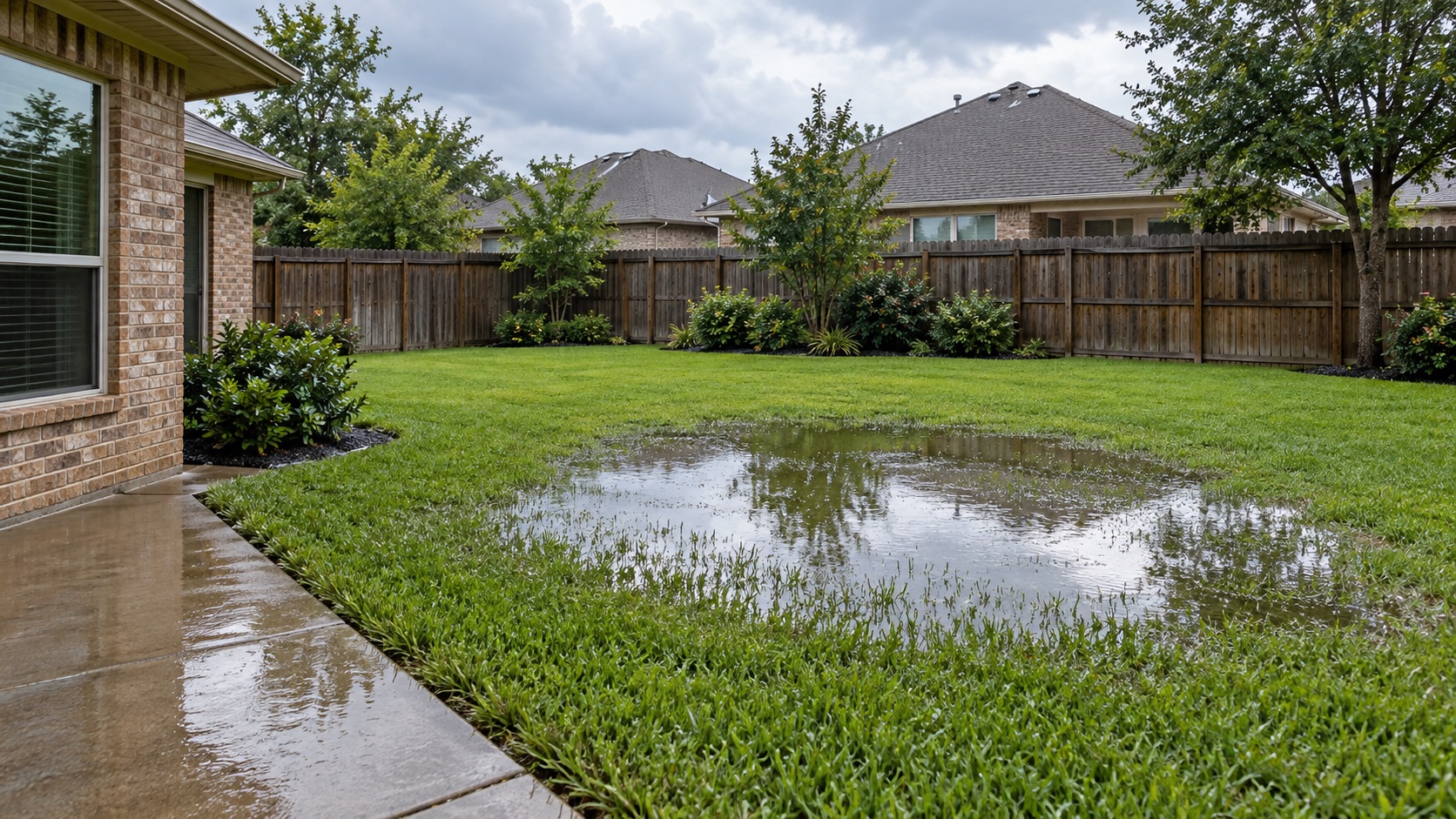
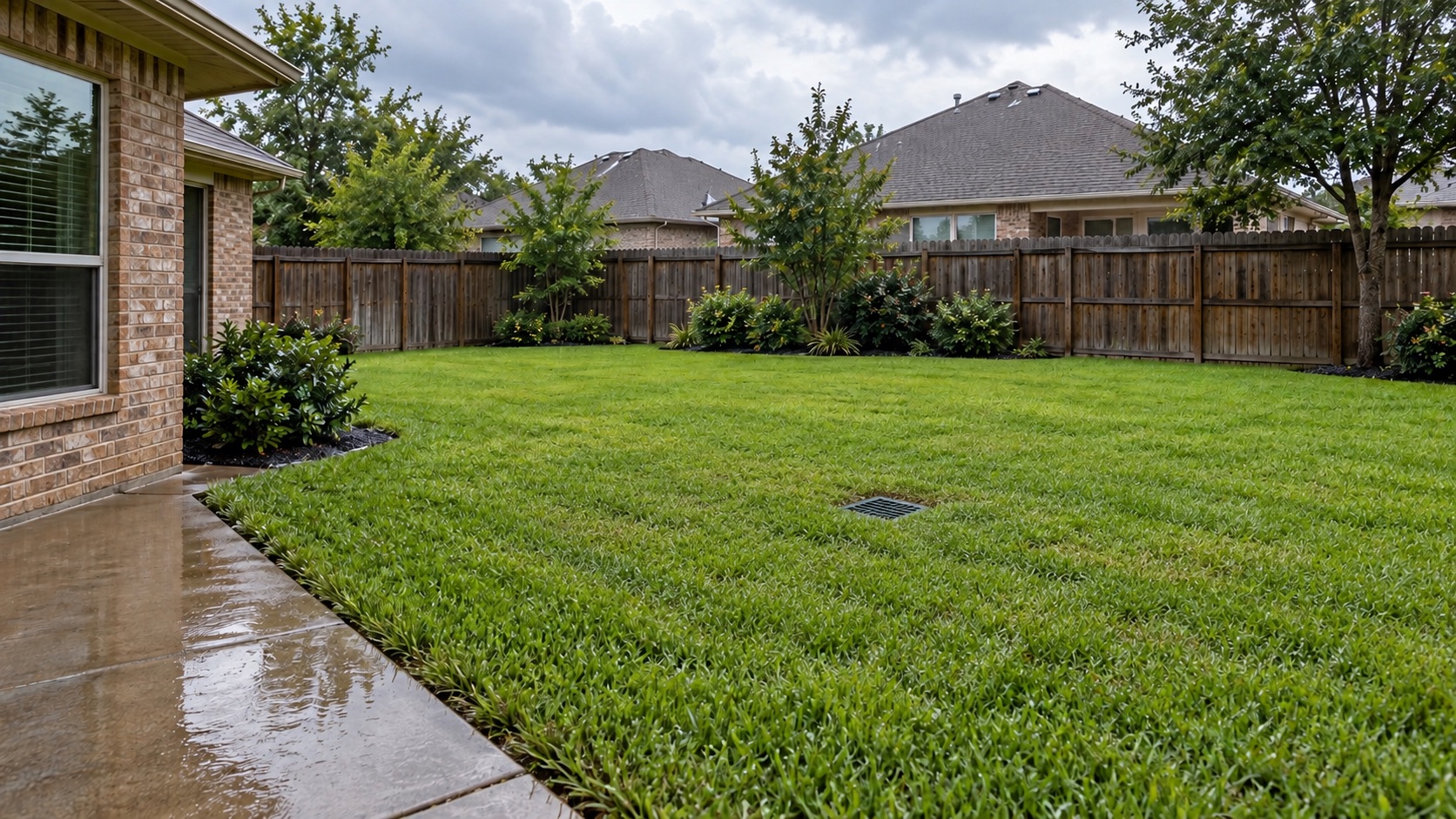
Tell us about the property →Turn puddles into usable space. Explore drainage solutions for low spots, soggy side yards and patios.
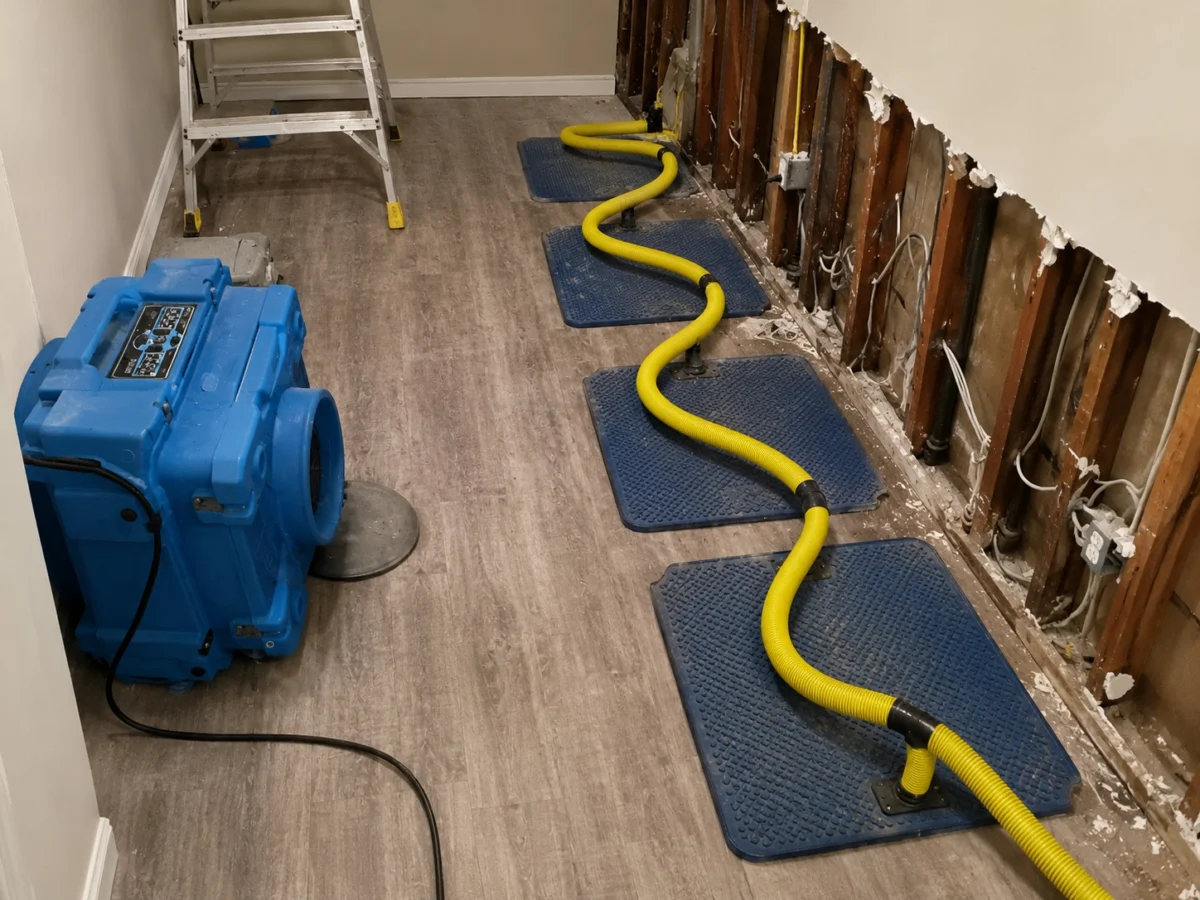
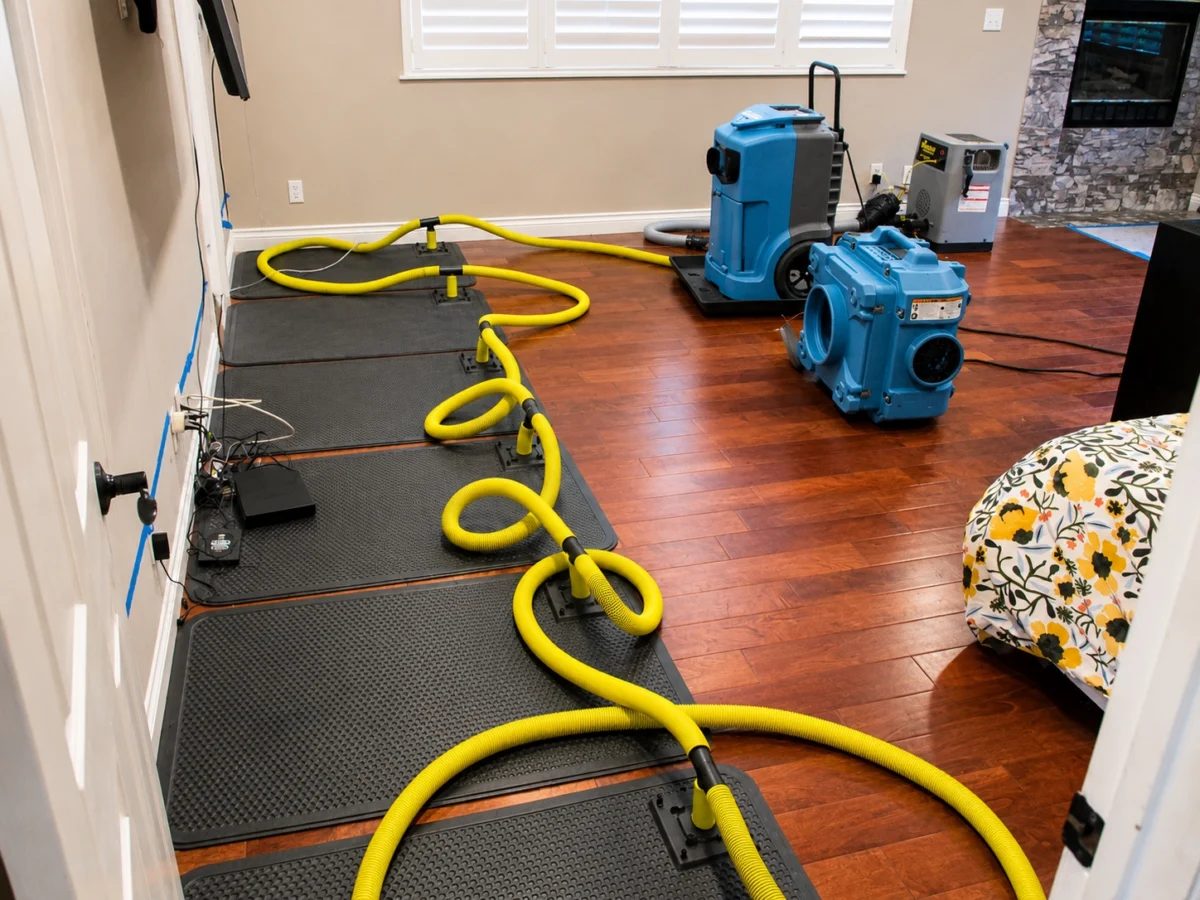
Restoration is not about filling a room with fans. It is about understanding where the moisture traveled, how materials are responding, and when the structure has actually reached an appropriate dry condition.
A drying plan connects the condition of your home with the right equipment and repeated measurements. Here is what the machines do—and why they are not interchangeable.
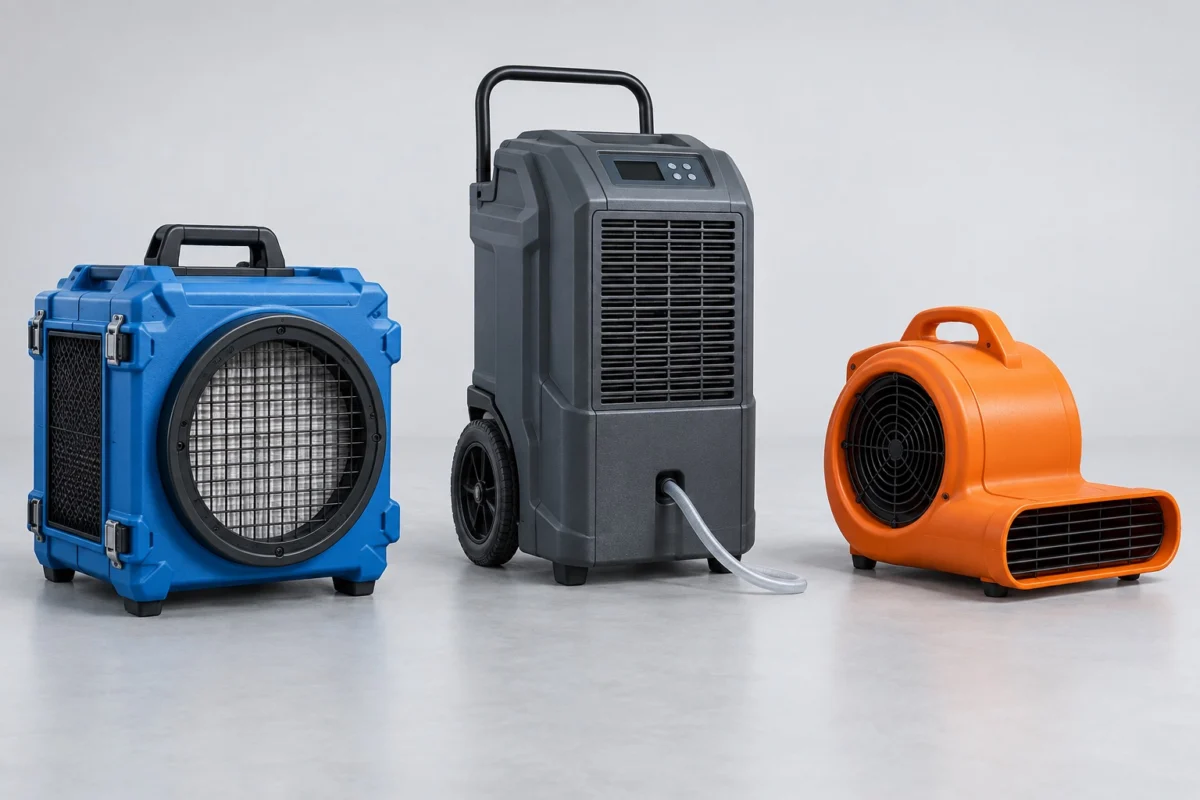
Check affected materials and track progress against appropriate drying goals.
Remove water vapor from the air during the drying process.
Direct airflow to support evaporation where the drying plan calls for it.
Filter airborne particles as part of appropriate work-zone controls.
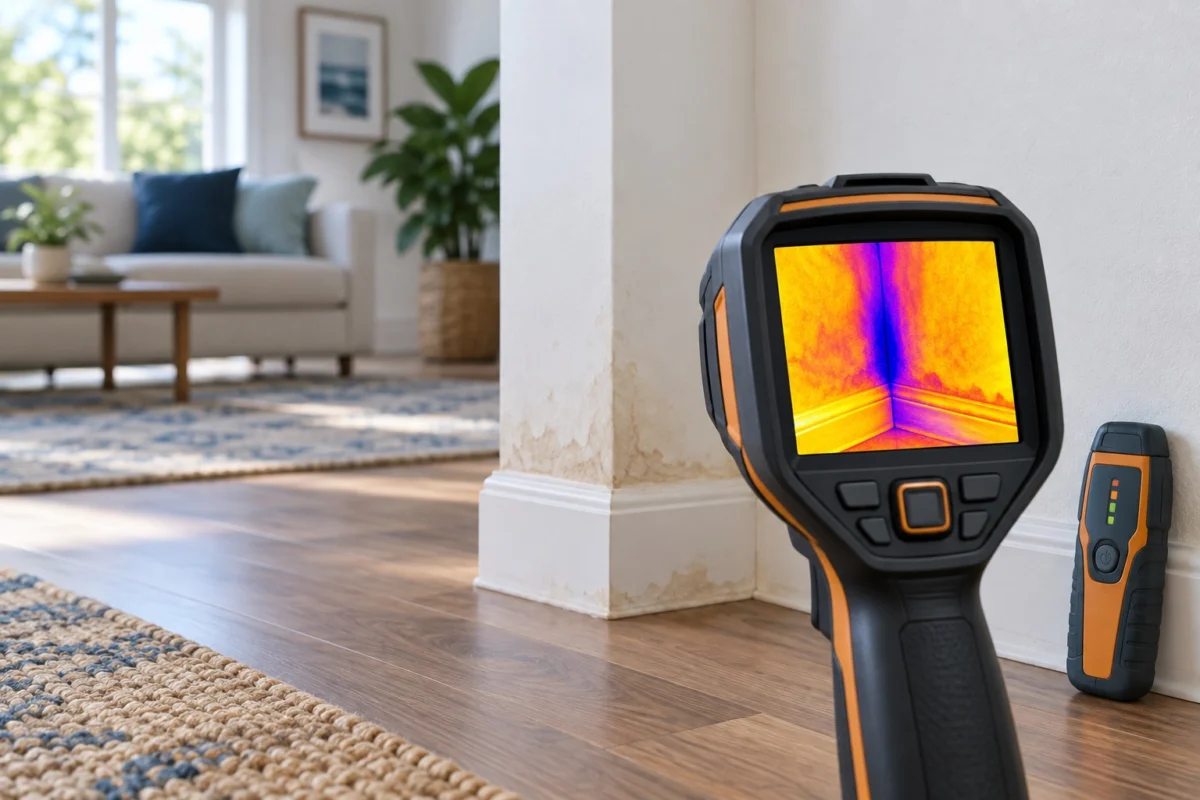
A surface can look dry while questions remain about the materials around it. Learn how thermal screening and moisture-meter readings help guide further investigation.
Every loss is different, but the priorities stay consistent: understand the damage, stabilize the environment, dry what can be saved, and document the result.
Tell us what happened and when it started.
We identify affected areas and materials.
Water and damaged materials are addressed.
Equipment is installed and progress measured.
Final conditions and next steps are reviewed.
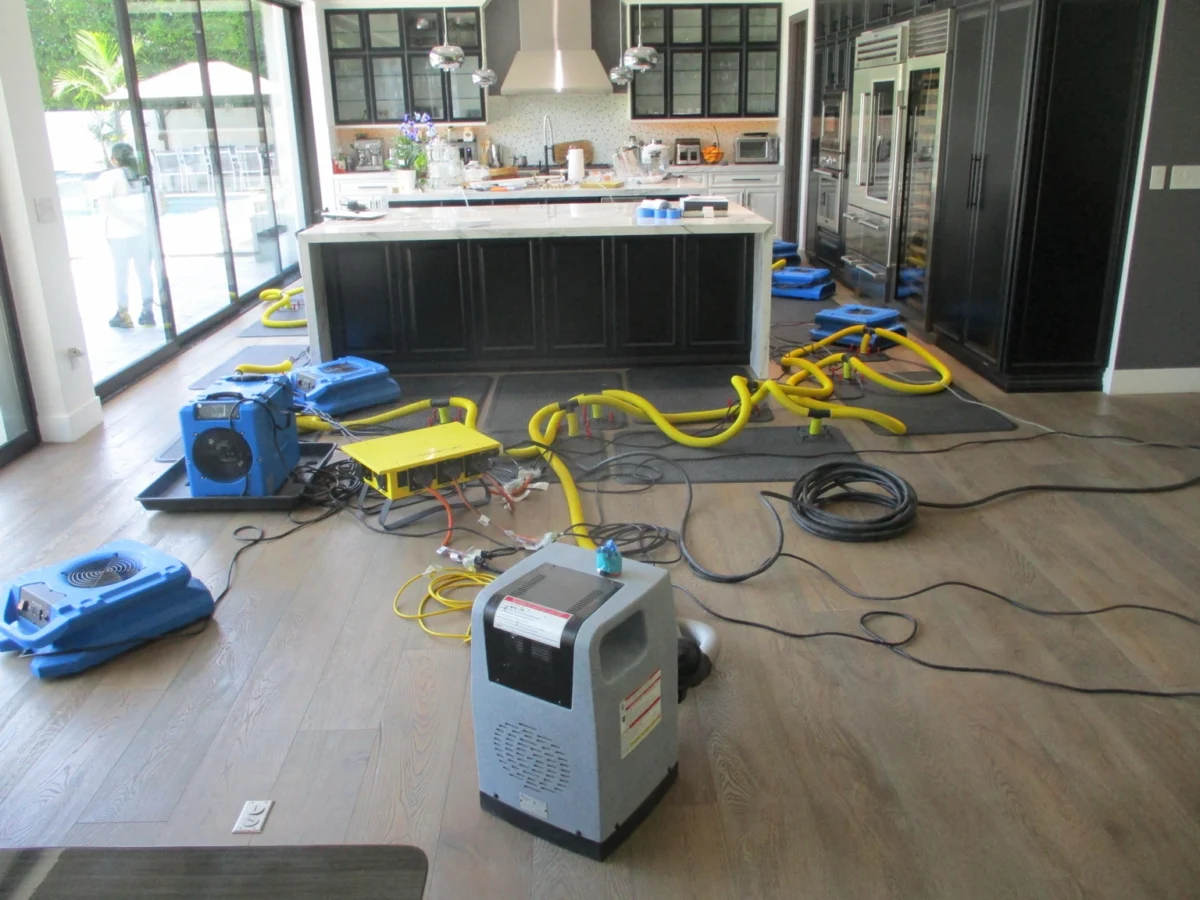
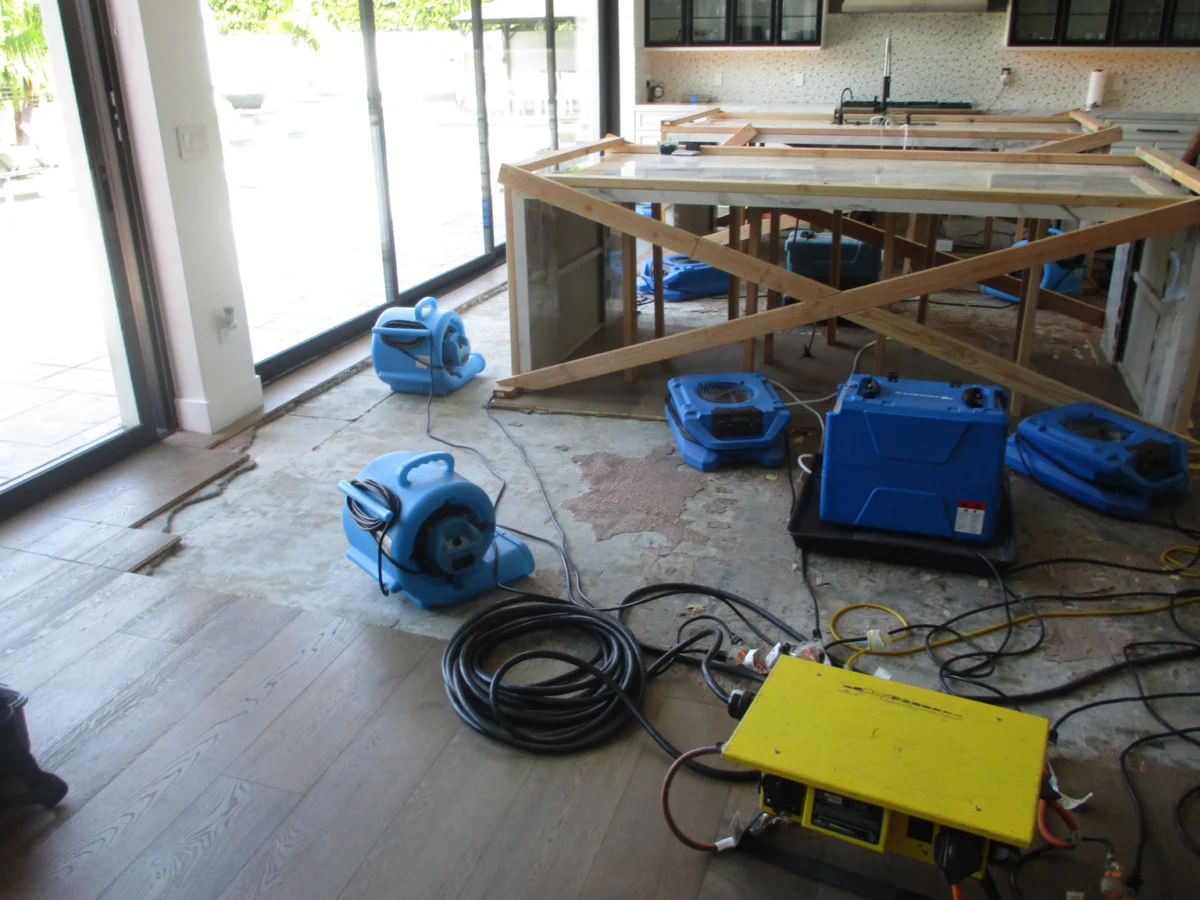
No generic stock photography. These images show the kind of controlled drying systems and field setups used on actual projects.
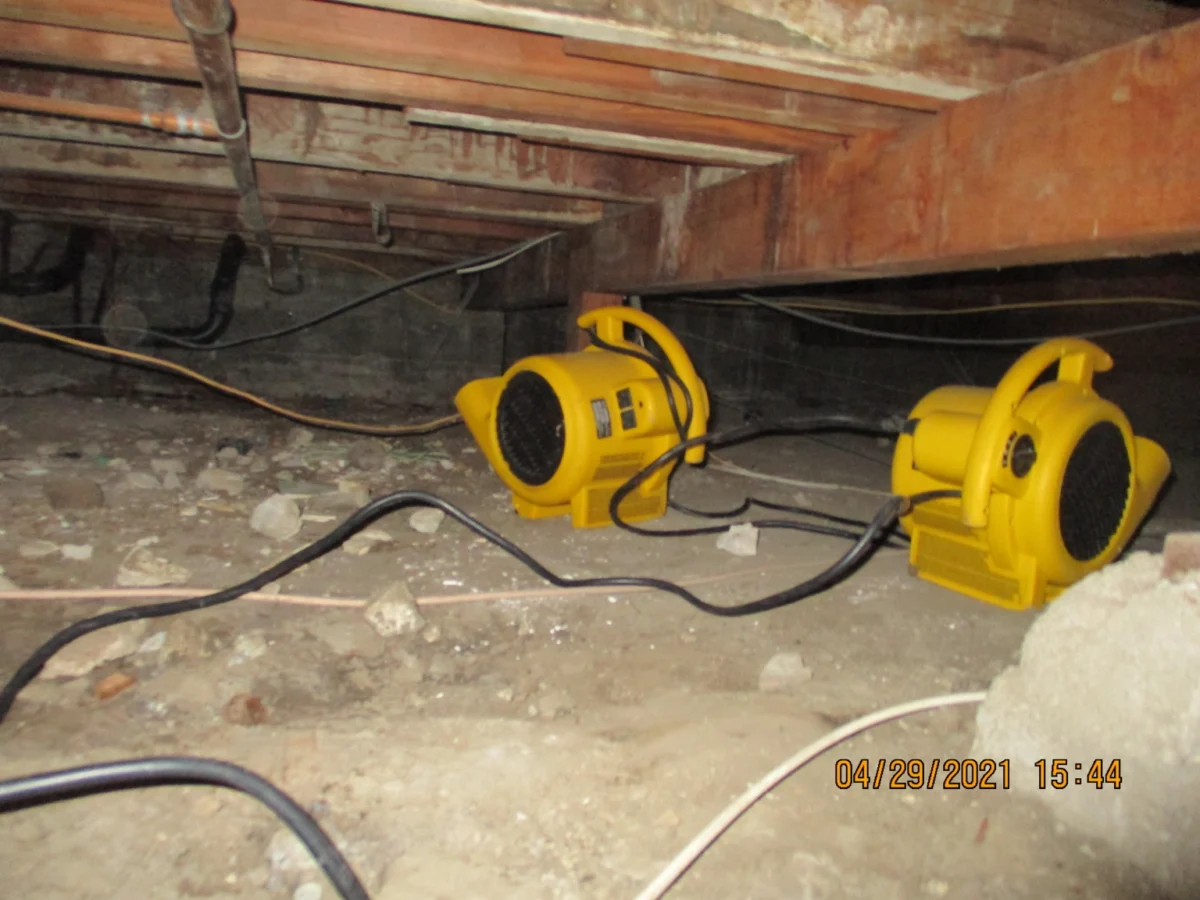
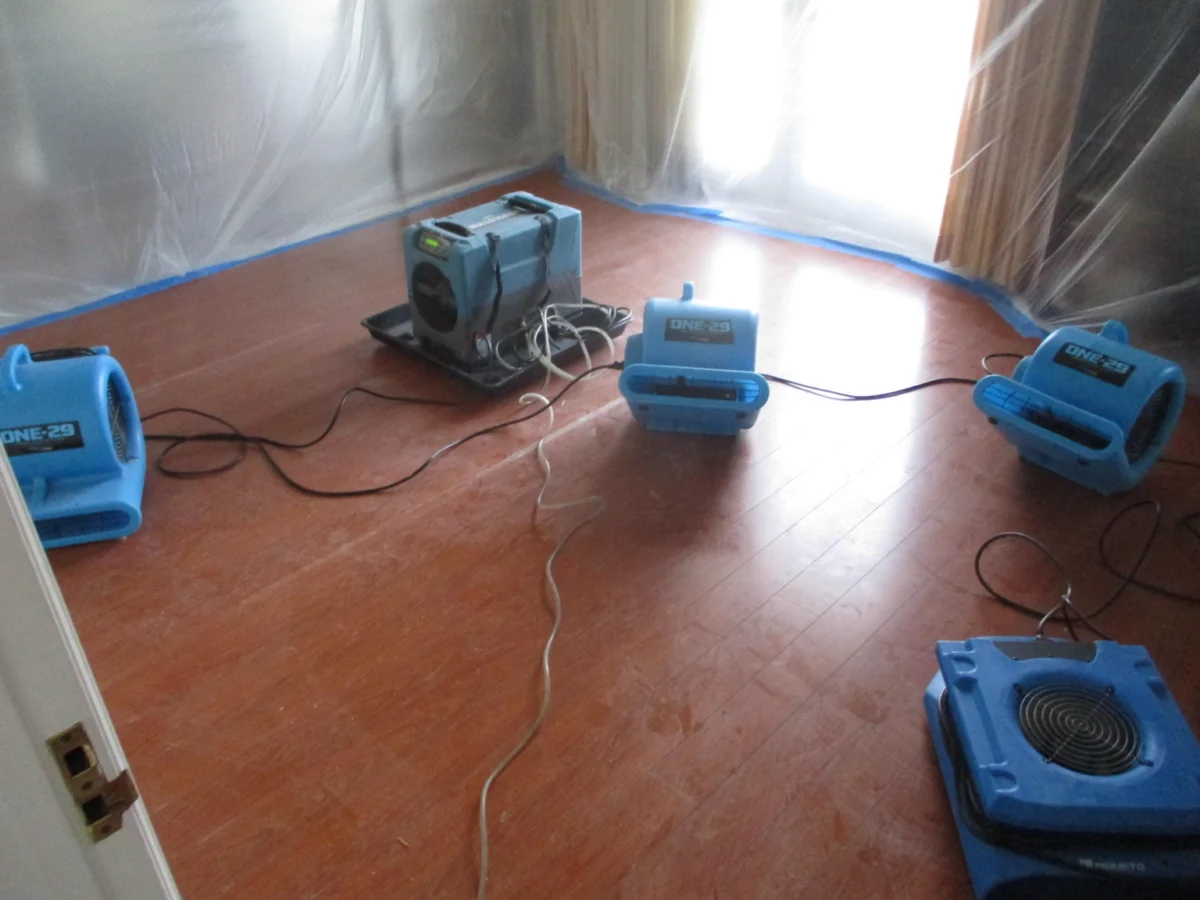
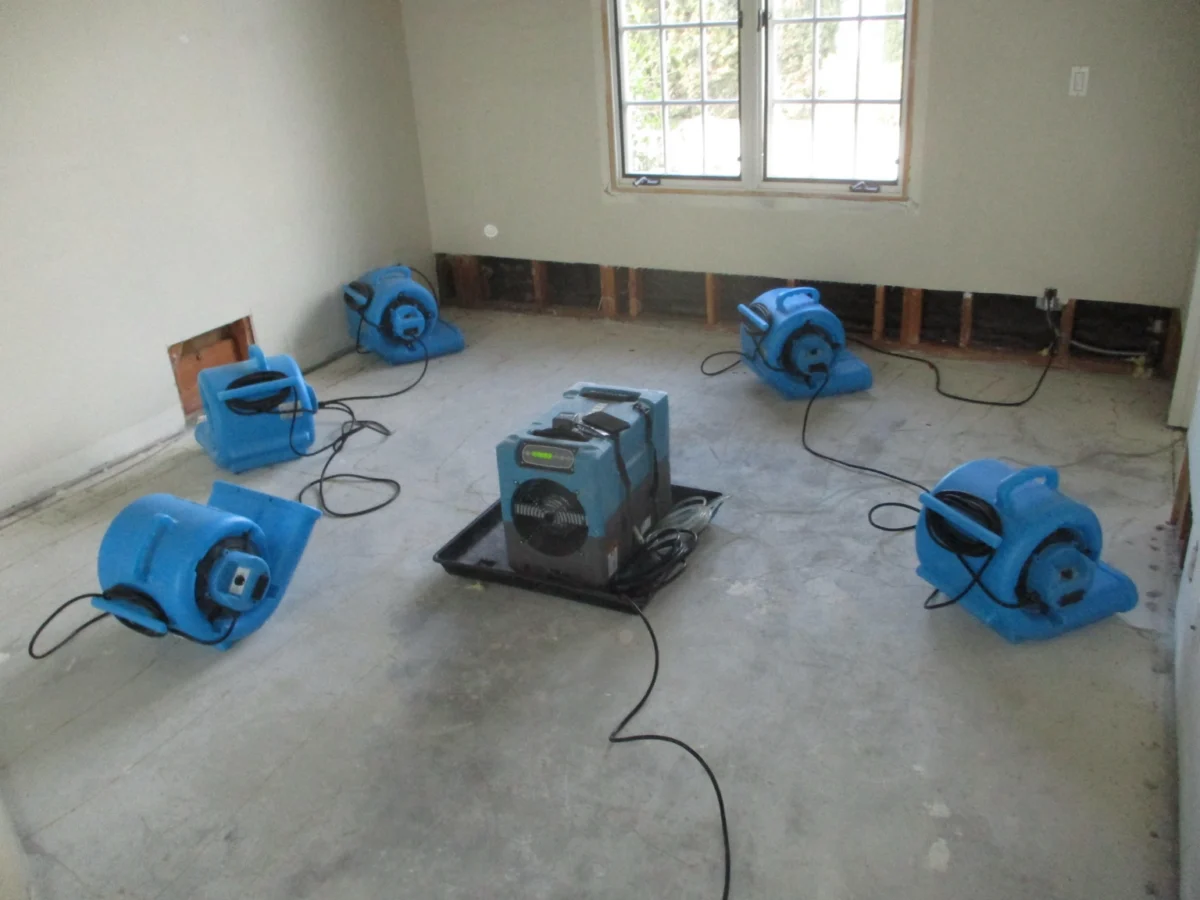
Clear, science-based guides to water movement, structural drying, indoor humidity, and mold—built for Greater Houston property owners.
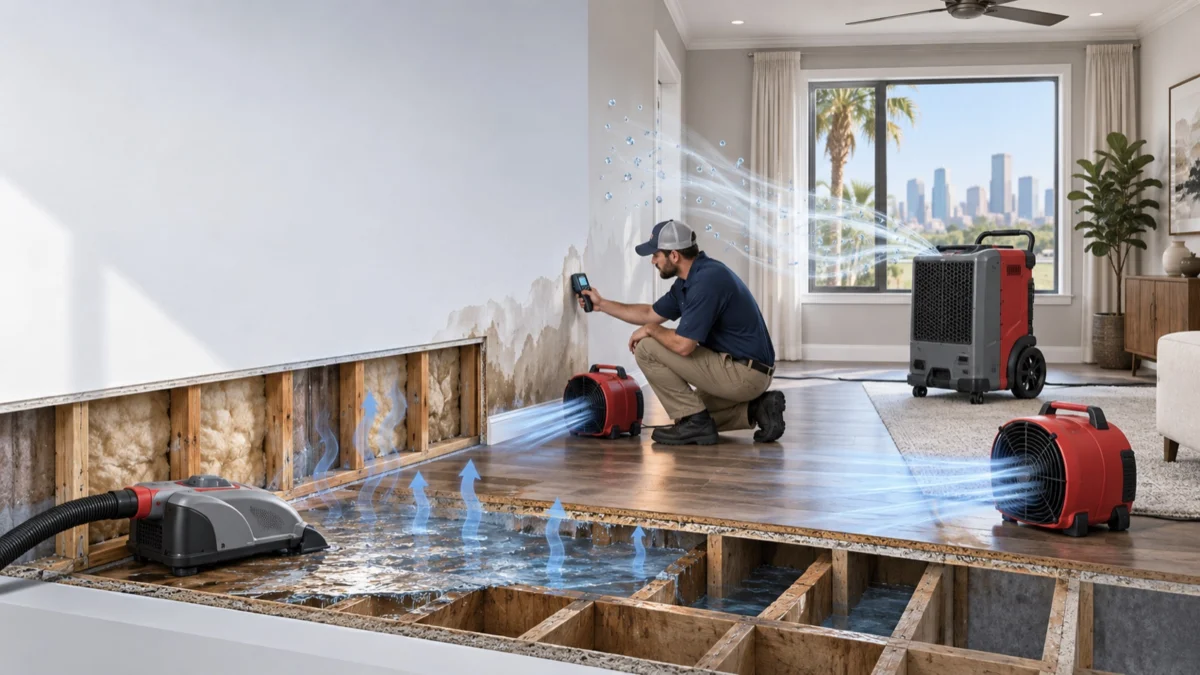 Water science
See how extraction, airflow, dehumidification, temperature, RH, and dew point work together.
Read the structural drying guide →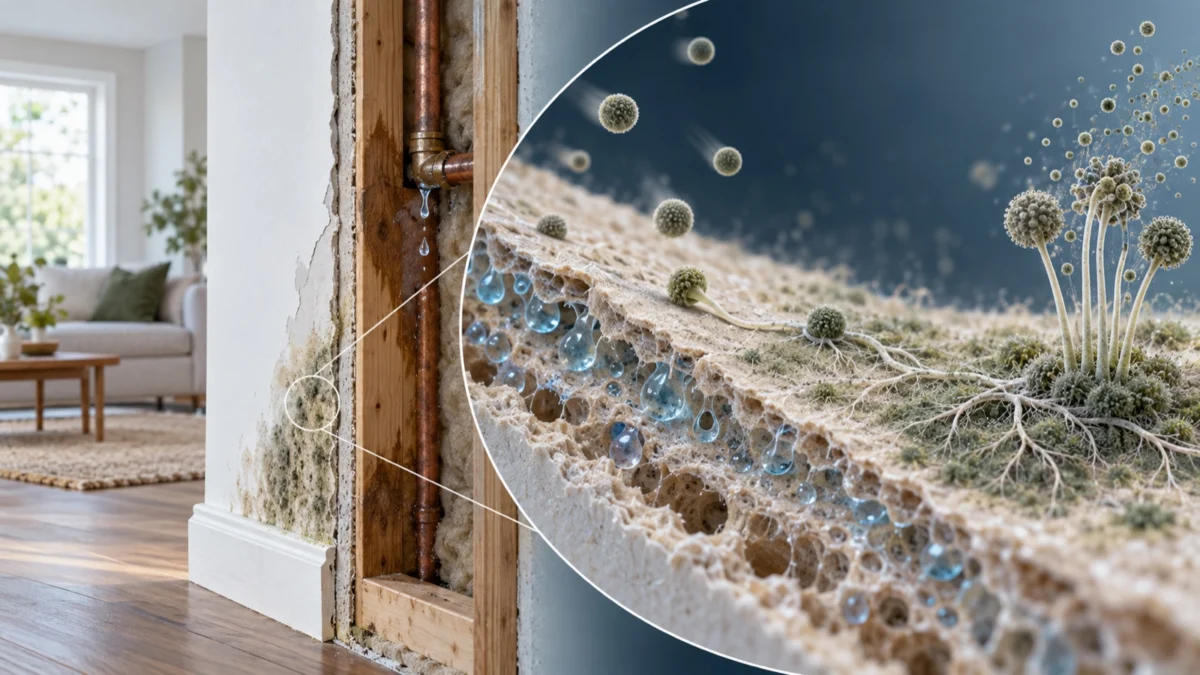 Building biology
Learn what mold needs to grow, what color cannot tell you, and why moisture control is the practical starting point.
Read the mold and moisture guide →Find practical emergency advice and homeowner guides in one place.
Open the Knowledge CenterProperty damage is already stressful. The restoration company should make the next step clearer—not more confusing.
“Our job is to show you what is wet, what can be saved, and what needs to happen next. Then we document the work and keep you informed.”
— Fire & Water Restorers
Our emergency line is available 24/7. Call with your location and what happened so we can check crew availability and discuss the next step.
We discuss the source of the damage, inspect accessible affected areas, and use moisture readings to help define the work. We explain the proposed scope before work begins.
The scope depends on the affected materials, access, equipment and monitoring needed. Call to discuss your situation and how an estimate will be prepared. We can discuss insurance and self-pay options.
We can document affected areas, photos, moisture readings, equipment and drying progress. Your insurance company determines coverage.
Timing varies with the materials and site conditions. We monitor moisture readings and review final conditions rather than promising the same number of days for every property.
Calling or texting is fastest for active water damage. The form is available for a callback. Include your location, what happened and when it started.
For active water damage, calling or texting is fastest. You can also send the form for a callback.
Share a few details and we’ll contact you as soon as possible.