Containment and HEPA Air Scrubbers: What Homeowners Should Know
Containment separates a work area from the rest of a building. HEPA filtration captures particles from air passing through the filter. Neither replaces correcting the moisture source or properly addressing affected materials.
Why the plastic barriers are there
Opening walls and removing damaged materials can disturb dust and mold. A containment plan uses barriers and controlled access to limit spread into adjacent spaces. EPA guidance describes different levels of containment and emphasizes adapting the plan to the extent and conditions of the work.
Air scrubber and negative air: related, but different
An air scrubber filters air. A negative-air arrangement also controls airflow so air moves into the work zone rather than carrying particles outward. That requires a suitable setup; putting a machine in a room does not automatically establish negative pressure. Ask how the contractor will check that the intended controls are working.
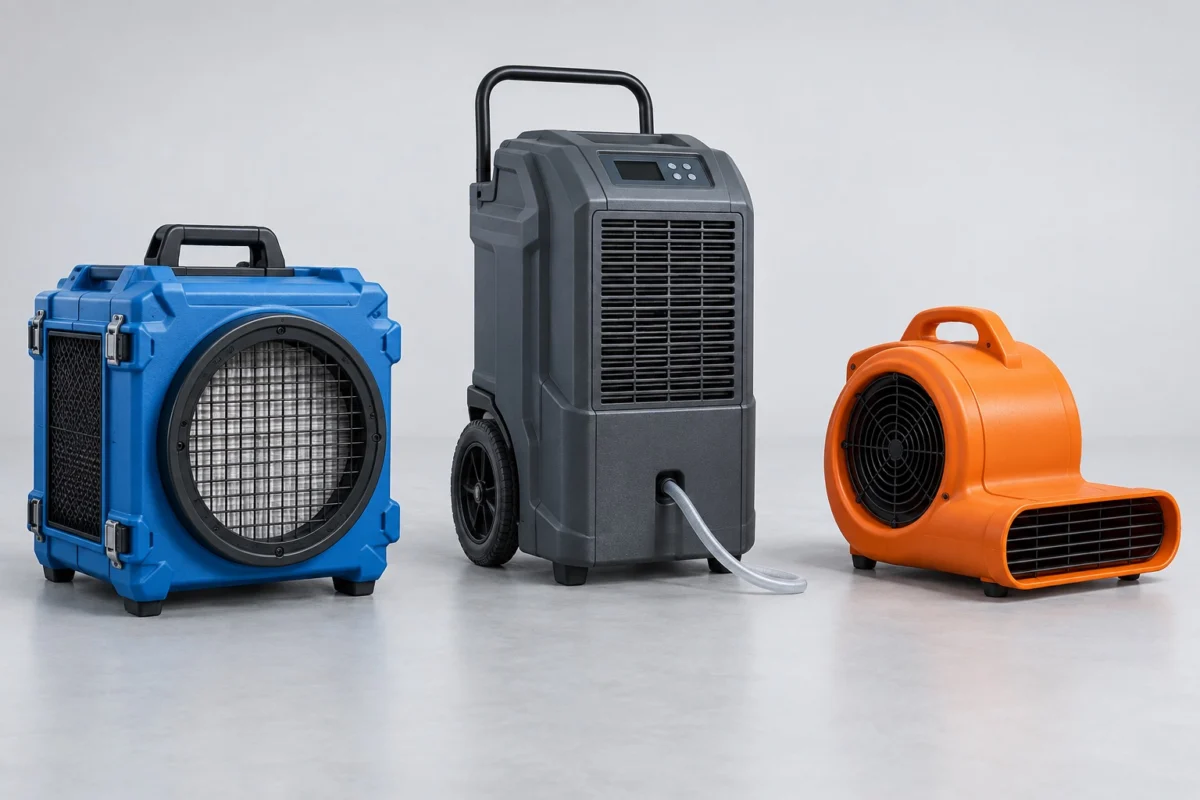
Three machines, three jobs
- Air scrubber: filters airborne particles through its filtration system.
- Dehumidifier: removes water vapor from the air as part of a drying plan.
- Air mover: directs airflow to support evaporation where appropriate.
Equipment selection should follow the condition of the building. Ask the team to explain each device before it is installed, including where it will sit and which electrical outlets it will use.
Questions to ask before work starts
- Which rooms will remain accessible?
- How will people, pets, and belongings be kept away from the work?
- What is the route for taking materials out?
- Who should I call if a barrier opens or a machine stops?
- What needs to happen before barriers and equipment are removed?
Write down the answers and share them with everyone in the household. Ask before moving equipment, opening barriers, or changing the agreed access route.
Keep the scope clear
Request an itemized explanation of the controls, cleanup, drying, documentation, and any separate verification or rebuild work. This helps you compare proposals on the work included. Our drying guide explains monitoring; our mold remediation page explains how to discuss your situation with us.
Have questions about the proposed work?
Call Fire & Water Restorers for a practical conversation about your property and next steps.
Call (713) 936-4546Reference: EPA: Remediation planning, containment, and equipment. This guide explains concepts; it is not a site-specific work plan.